

Beyond Checklists: How Laboratories Scale Competency with MediaLab
October 14, 2026
|
1 PM ET
Speakers


Mariana Bowman
Share
A competency program rarely fails all at once. It fails one missed reassessment, one outdated form, and one undocumented observation at a time.
The lab grows. A new instrument. A second turnover. A site added through acquisition, running the same test menu using a different set of competency assessment forms. The spreadsheet still opens, so the problem stays invisible for a while.
Then someone asks which version is current. Whether the six-month reassessments actually went out. Where the direct observation checklist lives for the tech who transferred from another site in March. Whether the night shift at the second site documents competency the same way the main lab does.
Usually that someone is an inspector.
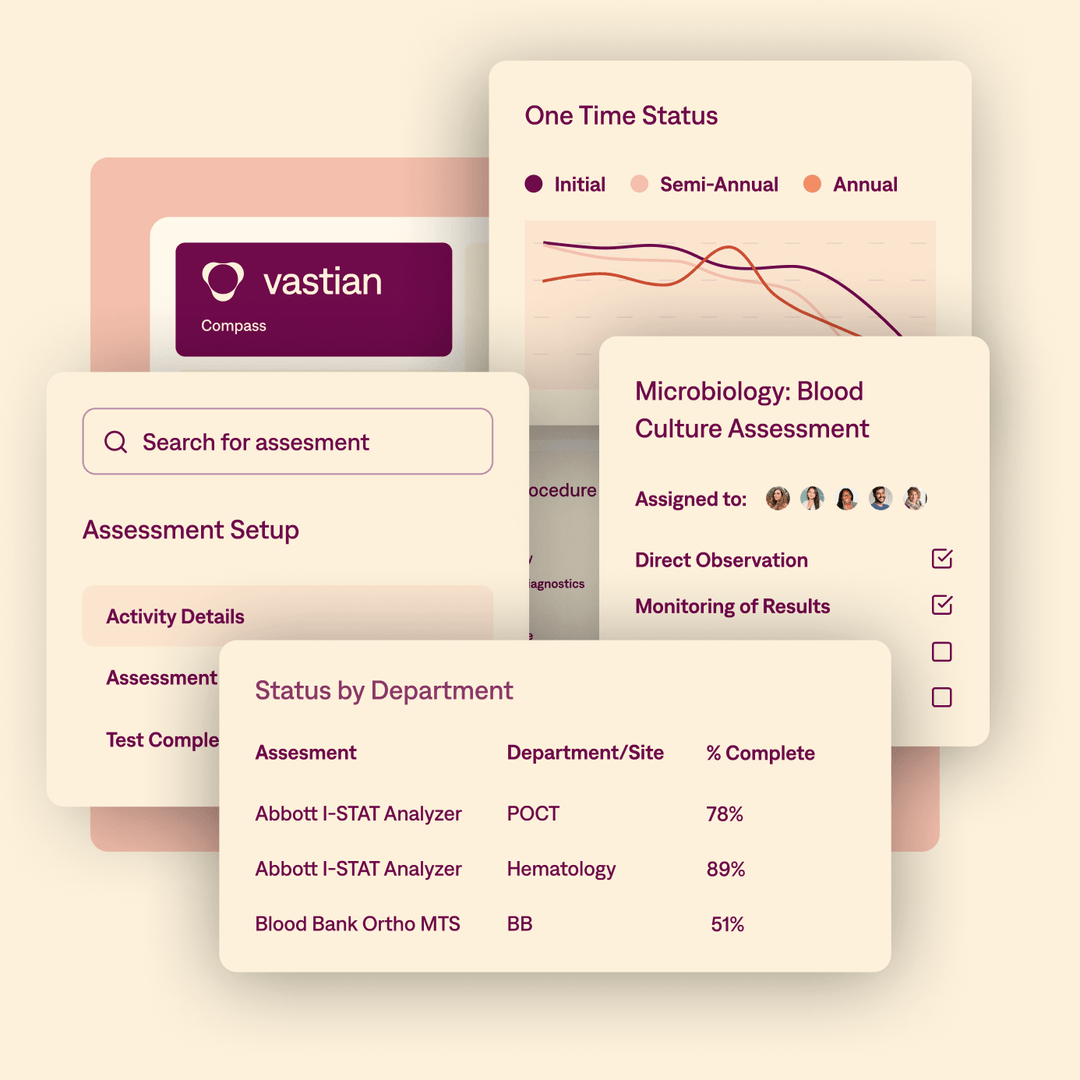
Join us for a working demonstration of Compass and CompassPlus, and see what competency management looks like when tracking is automated instead of held together by spreadsheets and follow-up emails.
What we will show you:
- How to build competency frameworks by role, department, test system, and responsibility, drawing on a shared library of more than 10,000 assessment templates instead of writing checklists from scratch
- How to schedule initial, 6-month, and annual assessments once, then let them recur with automated reminders that reduce manual chasing
- How CompassPlus virtual case simulations assess applied decision-making, so you can see how a tech reasons through a problem rather than only that they completed the checklist
- How sign-offs, observation checklists, quizzes, assignments, and supporting evidence stay connected to the employee record for easier retrieval during inspections
- How to see completion status, overdue assessments, and upcoming deadlines across sites in one view, with workflows that support all six CLIA competency elements and related requirements including 42 CFR 493.1235 and CAP GEN.55500
Most competency programs do not break because laboratories stop caring. They break because manual oversight does not scale, and the gap only becomes visible during an inspection.