Leader Rounding: How Frequent Observation Builds High-Reliability Culture
September 3, 2026

Written by

Michelle Hilburn
AVP Quality, Compliance and Standards
Most hospitals have audit programs. Quarterly audits, mock surveys, and internal tracers are well established in nearly every Quality calendar. What is harder to sustain is visibility into what happens between those formal checks: the night shift, the holiday weekend, the unit that has not had a leader walk through in three weeks. That in-between space is where standards drift, workarounds normalize, and risk accumulates long before it appears in a report.
In my years leading Quality programs, I have seen units pass an audit with strong marks, only to have a preventable event later traced back to a process that had been drifting on the floor for weeks. Structured, frequent rounding closes that gap. Executed well, it gives leaders a real-time view of how care is actually delivered, not just how it looks on the day an auditor is present.
Key takeaways:
- Audits capture a moment. Reliability is a pattern, and that pattern is built—or lost—in the time between audits.
- Rounding becomes a reliability mechanism only when it is intentional, scheduled, and standardized. Otherwise, it is just a well-meaning walkaround.
- An integrated Quality Management System (QMS) closes the loop between observation, corrective action, and follow-through—the point where most manual rounding programs quietly fail.
- Rounding is not surveillance. When framed and led correctly, it builds trust, visibility, and accountability that sustains every other Quality initiative.
Why Don’t Audits Alone Sustain Reliability?
Audits are snapshots. Reliability is a pattern. And the time between audits is exactly where drift lives.
This is not a criticism of audit programs; they remain essential. But behavior under observation is not the same as behavior in everyday practice. When staff know a survey window is open, or that a specific unit is being audited that week, performance naturally tightens. That is a well-documented, entirely human response, not a discipline problem. It means audits measure preparedness for the audit itself, not the unit’s everyday reality.
Between one audit and the next, normalized deviance has room to settle in. A workaround that begins as an exception can quietly become the way the work gets accomplished. That does not reflect poor discipline among frontline staff. It reflects the absence of a structure that reinforces the standard consistently, every shift, every day—not just when someone is watching.
The distinction comes down to the question each approach is built to answer:
"Compliance asks, 'Did we pass?' Reliability asks, 'Are we safe right now?'"
Audits will always have a place in a Quality and safety program. But a program that relies on audits alone has, by design, a built-in blind spot: the long stretch of everyday practice between formal reviews.
What Is Structured, Frequent Rounding?
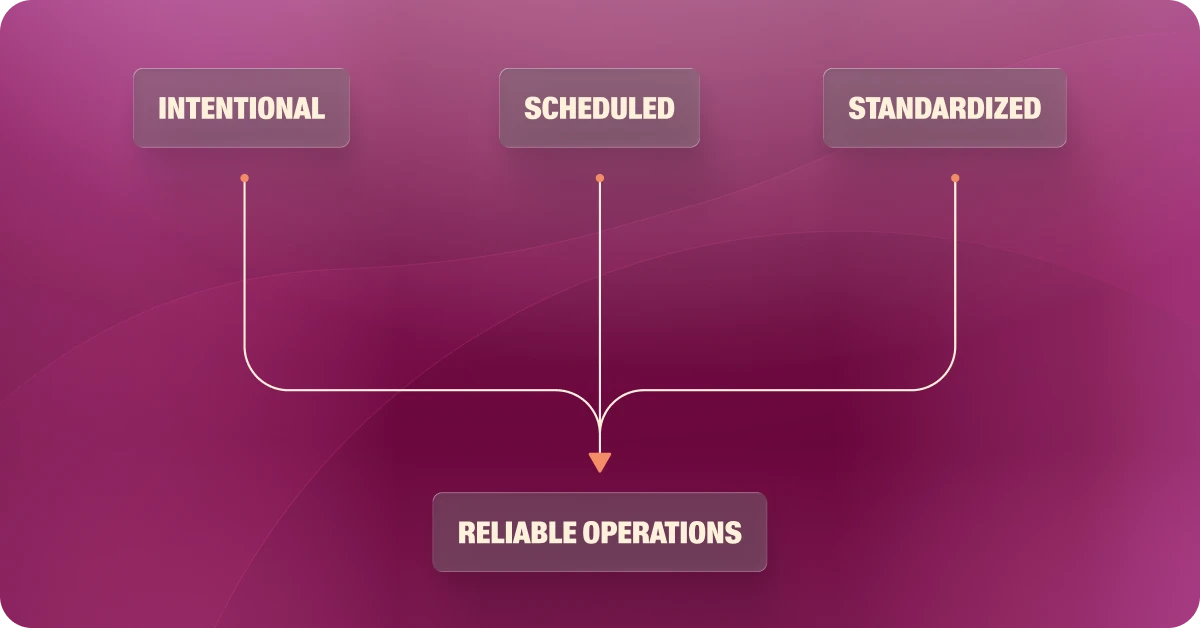
Structured rounding is a proactive reliability mechanism, and it rests on three pillars: intentional, scheduled, and standardized.
Intentional means the round has a defined purpose. Leaders observe care delivery or department operations against known standards, not simply walking the floor and hoping something useful surfaces.
Scheduled means the cadence is predictable and built into the unit’s operational rhythm, not squeezed in when a leader has a free hour.
Standardized means every round applies the same criteria, through digital checklists, and produces comparable results across units, shifts, and time.
That third pillar is what separates structured rounding from a walkaround. A walkaround has value: staff notices when leaders are present, and that visibility supports trust. But social value alone is not a reliability mechanism. Structured rounding has a purpose, a process, and a product. Without those elements, a walkaround generates goodwill, not performance data.
The goal of a structured round is to close the gap between what leadership assumes is happening on a unit and what is actually happening. That gap, between assumption and reality, is where risk lives.
What Changes When Rounding Moves from Paper to Platform?
Manual rounding, even when the intent behind it is sound, creates the same three problems: data silos, lag, and inconsistency. An integrated QMS solves for all three at once.
Consider a finding on 3 East, documented faithfully by a charge nurse on a paper checklist and filed in a binder, or entered into a spreadsheet that lives on one person’s desktop. The finding is real. The observation was accurate. But it is invisible to the CNO, invisible to the department that could have acted sooner, and functionally invisible to the organization until someone happens to look for it or an event occurs.
That is the core failure of manual rounding: the observations may or may not be accurate, and the loop does not reliably close. Observation, action, and outcome tracking need to live in one connected system, not three disconnected places.
There is also a cultural cost. When staff raises concern during a round and nothing visibly changes, they stop communicating. That is not apathy; it is a rational response to a system that does not close the loop. Automation, and the visibility it brings, makes follow-through visible to the workforce, rather than something that happens quietly behind the scenes or not at all.
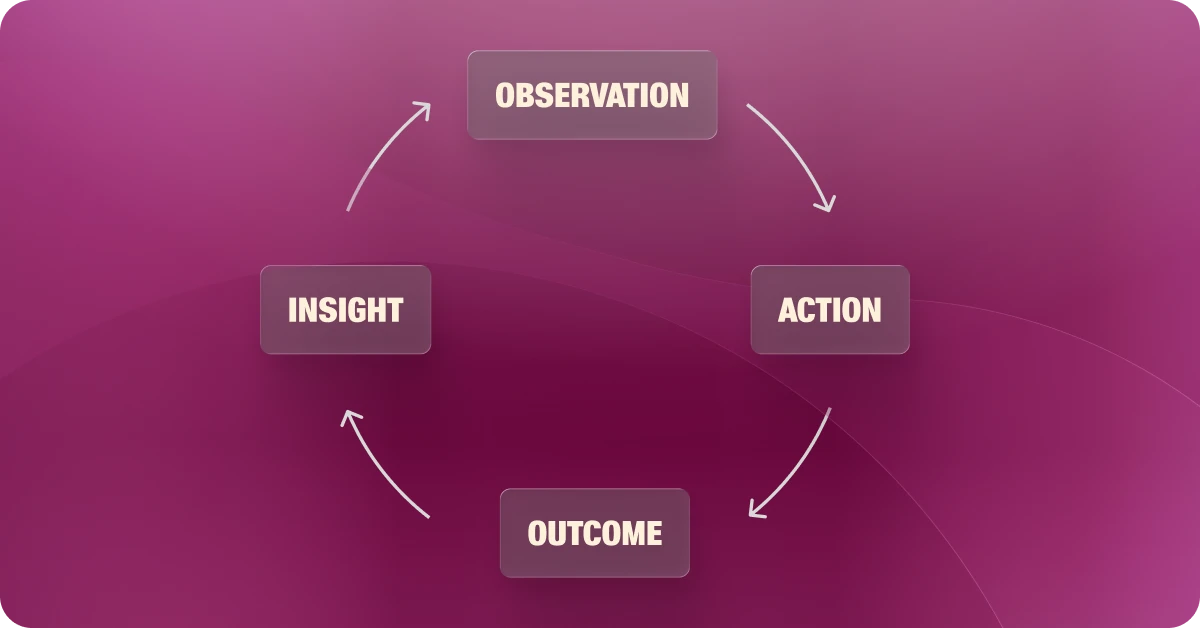
The practical difference is real-time visibility instead of waiting on a monthly report to learn that a finding from six weeks ago still needs attention.
Vastian Rounding is built around this premise: customizable digital rounding checklists, real-time data and reporting, survey-ready documentation, and advanced analytics and insights. Findings that require corrective action electronically route into Vastian APPIL, and any observation that rises to the level of a safety concern can route to Vastian Events, so the finding, the action, and the outcome stay connected within one QAPI solution instead of living in three separate places.
How Does Rounding Turn High-Reliability Principles into Practice?
Rounding is not an activity that sits alongside high-reliability principles. It is how those principles get applied, day to day, on the patient care units.
Sensitivity to operations shows up in the details rounding surfaces that a dashboard cannot: a crash cart missing a component, isolation signage that has not been updated, a workaround that has quietly become routine.
Preoccupation with failure means every round is a deliberate search for what could go wrong, not a check to confirm everything looks fine. A ‘clean’ round is not a wasted round; it still validates that the standard is being maintained.
Reluctance to simplify matters most when a pattern shows up across multiple units. It is tempting to explain a recurring finding as a training gap on one unit. When the same finding appears in three departments, that explanation stops holding up, and the real root cause is almost always structural.
Deference to expertise means frontline observations flow upward. Rounding, performed well, is a two-way exchange, not a supervisory check-in. The person closest to the process understands its failure points better than anyone reviewing it from a distance.
What Outcomes Can Rounding Actually Shift?
Structured rounding is measurable in three areas: patient safety event rates, survey readiness, and Quality measure adherence.
Rounding catches risk upstream, before it reaches a patient. A finding tied to a falls protocol, for example, can trigger same-day corrective action and a re-observation, rather than surfacing weeks later in a retrospective review after a patient fall with injury has already occurred.
Every structured round also functions as a mini tracer. When rounding checklists mirror what surveyors assess (environment of care, medication safety, infection prevention, patient rights), survey readiness stops being a project the organization mobilizes for when the survey window opens and becomes a byproduct of how the unit operates 24/7/365.
Rounding data also behaves as a leading indicator rather than a lagging one. Declining compliance on a specific protocol is an early warning sign, visible before related events increase, that provides leaders a chance to intervene before the lagging metric moves.
None of this rests on a single number. The real proof is convergence: safety events, patient and staff satisfaction, engagement, Quality measure adherence, and rounding findings all moving in the same direction at the same time.
A Falls Reduction Example: Why the Interventions Stuck
The interventions themselves were not new. Bedside shift reporting, consistent fall risk assessment, and a “potty partner” model for at-risk patients are all familiar components of many fall prevention strategies. What made the difference in this case was not the interventions. It was the mechanism that kept them from fading long after the initial rollout.
We embedded each intervention as its own observation element in the rounding checklist, rather than left as a one-time education point. When compliance on any single element dipped, it was flagged the same day, and coaching happened that day, on the unit, in real-time rather than waiting for the next scheduled staff meeting.
That distinction, same-day visibility paired with same-day coaching, is the difference between an initiative and a culture change. Initiatives may fade when attention moves elsewhere. A culture change holds because the reinforcement structure does not depend on anyone remembering to follow up.
How Do Leaders Keep Rounding from Becoming Surveillance?
In my experience, this is the single biggest risk in any rounding program: if staff experience rounding as surveillance rather than support, the data collected reflects performance under pressure, that is the same snapshot problem audits create, just on a more frequent schedule.
The round must function as a two-way conversation. When staff raise a concern, the response needs to be coaching and action, not dismissal or blame. That begins with the questions leaders ask. “How are you doing, and what do you need?” carries as much weight as “are protocols being followed.” The first question acknowledges the real demands of the work; the second, asked alone, reduces the round to an inspection.
Rounding is also an opportunity to recognize the informal leaders who hold to standards shift after shift, quietly, without anyone noticing. That recognition reinforces the behavior a rounding program is trying to sustain.
Leadership accountability matters just as much as staff accountability. Executives need insights into the consistency and completeness of leadership rounds. Additionally, rounding must occur at different times, on different days to verify consistent execution across the continuum of care. For example, if compliance looks meaningfully different on days compared to nights, that is not evidence of a night-shift problem. It is evidence of a gap in reinforcement, staffing support, or resources during a specific shift. Every gap a rounding program surfaces should be attributed to the systems or structures supporting the work, never to the character of the people doing it.
Frequently Asked Questions
What is the difference between rounding and auditing?
Audits are point-in-time validation. Structured rounding is continuous observation built into daily operations. Both play a role in a Quality program, but only one sustains reliability between surveys.
How often should leaders round?
Cadence matters more than raw frequency. Daily, weekly, or shift-based rounding can all work, provided the schedule is predictable and consistently followed. The right cadence depends on the unit, the risk profile, and the resources available to sustain it.
What should a rounding checklist include?
Standards-based observation criteria that mirror what surveyors assess: environment of care, medication safety, infection prevention, and patient rights, standardized across units and shifts so the resulting data is comparable.
How does rounding support survey readiness?
Every structured round functions as a mini tracer. Compliance is validated continuously rather than in a concentrated push before a survey—the survey window stops being a mobilization event and becomes confirmation of what the organization already knows about itself.
Conclusion
Rounding is not a walkaround, and it is not a survey-prep ritual. It is a daily discipline, and three things matter most when developing a rounding program:
- Reliability is built in the space between audits, not during them.
- An integrated QMS turns rounding from a checklist task into a strategic asset leadership can see and act on.
- Leaders decide whether a rounding culture takes hold or quietly fades. The tool only works as well as the consistency behind it.
Organizations that rely on memory, spreadsheets, and disconnected processes often struggle to sustain the visibility and accountability rounding requires. Vastian helps connect rounding observations, corrective actions, and outcomes in a single workflow supporting a strong, visible QAPI program. Request a demo to learn more.